
Puff Print vs DTF vs Screen Print vs Embroidery: Which Should You Choose?

The way you print or embroider your design changes how it looks, how it feels and how long it lasts — and it changes your cost. This guide explains the most popular decoration methods for hoodies, T-shirts and sweatshirts, so you can choose the right one for every design.
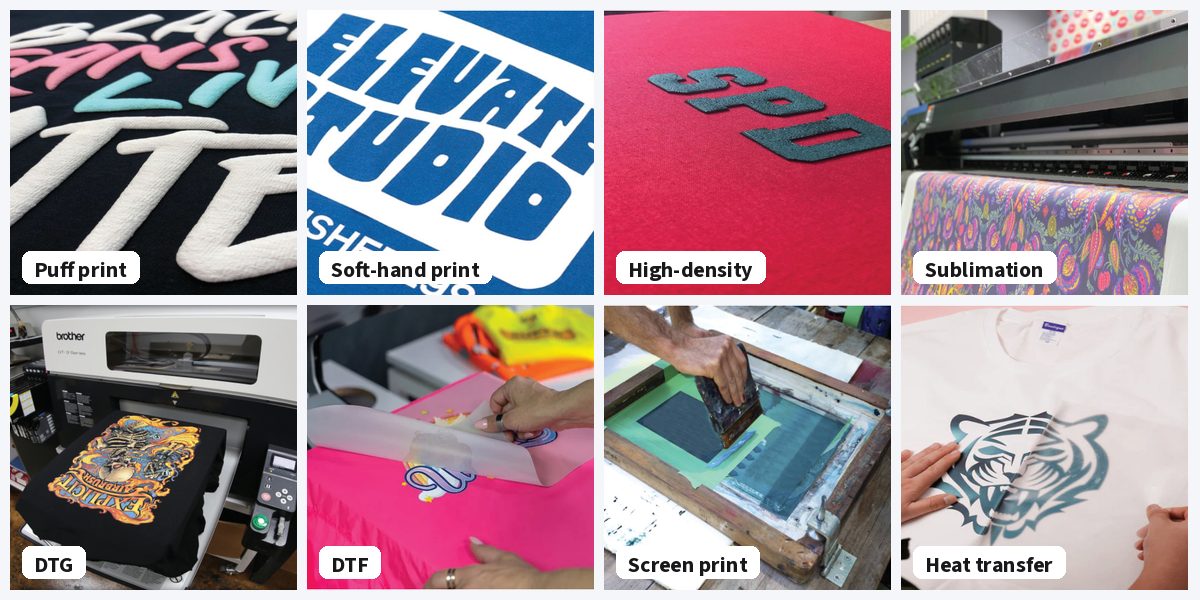
Screen printing
Screen printing pushes ink through a mesh stencil onto the garment, one colour at a time. It is the classic streetwear print.
Looks like: bold, solid, bright colours with a sharp edge.
Best for: logos and graphics with a limited number of colours.
Durability: excellent — lasts through many washes.
Watch out for: each colour needs its own screen, so designs with many colours or photo detail cost more.
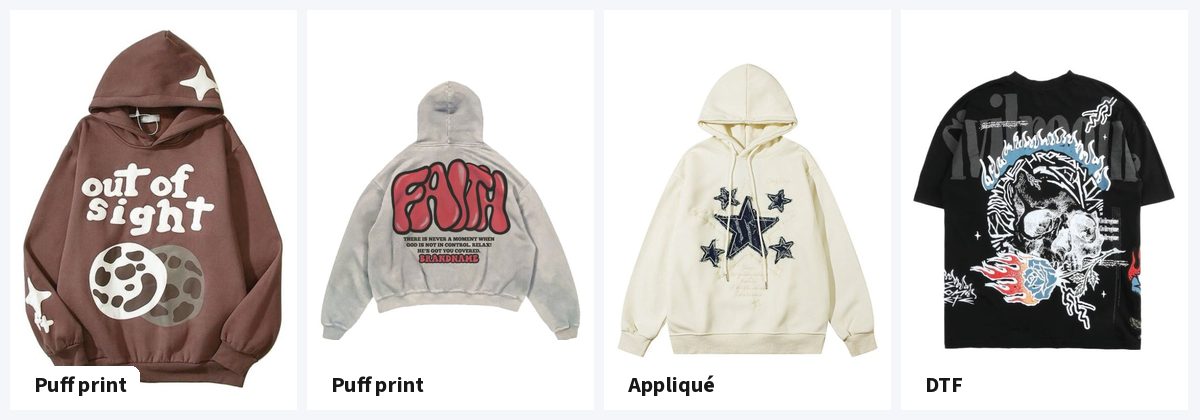
Puff print
Puff print uses a special ink that rises when heated, giving a raised, 3D feel. It is one of the most popular effects on streetwear hoodies right now.
Looks like: raised, soft, textured lettering and shapes.
Best for: big chest or back logos, slogans and simple shapes.
Watch out for: very thin lines and tiny text do not puff well — keep details bold.
High-density print
High-density printing builds up thick layers of ink for a sharp, raised edge — more defined and structured than puff print. It gives a premium, rubber-like finish to logos.
DTF (direct to film)
With DTF, your design is printed onto a film and then heat-pressed onto the garment.
Looks like: full colour, gradients and fine detail.
Best for: colourful artwork, photos and complex graphics; works on cotton and blends.
Durability: good when applied correctly.
Watch out for: large solid areas can feel slightly heavier than screen print.
DTG (direct to garment)
DTG prints the design straight onto the fabric with an inkjet-style printer. It gives a soft hand feel and full colour, and works best on light-coloured, 100% cotton garments. It is a good choice for detailed artwork on T-shirts.
Sublimation and all-over print
Sublimation turns ink into gas that bonds with polyester fibres, so the print becomes part of the fabric. It is ideal for all-over prints on polyester sportswear. It does not work on cotton or dark fabrics. For cotton all-over prints, the fabric can be printed before cutting.
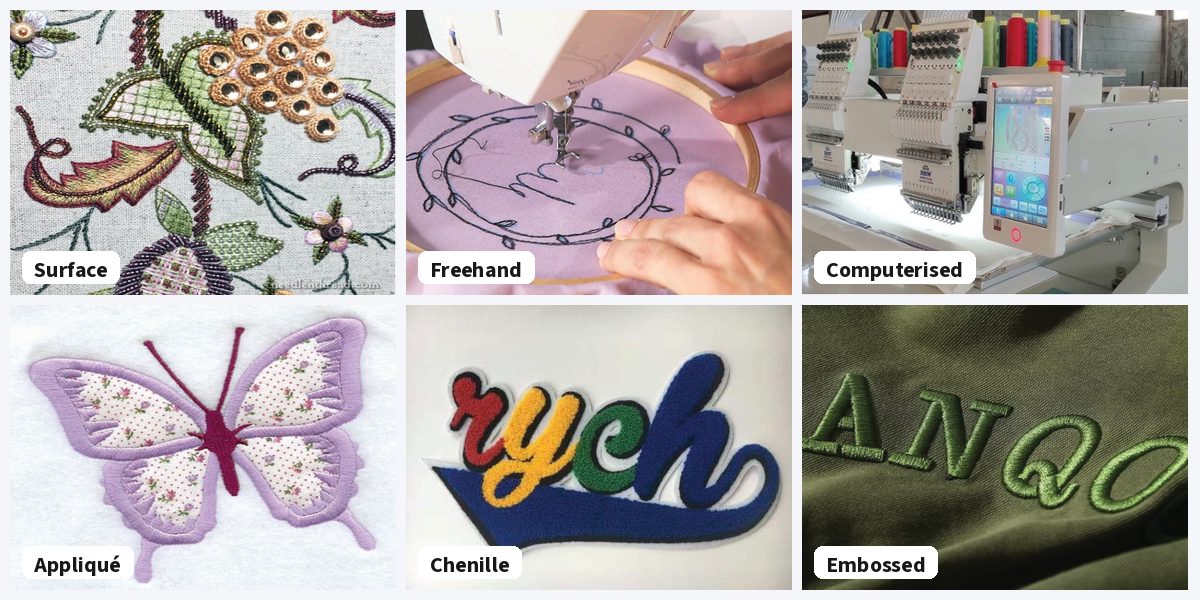
Embroidery
Embroidery stitches your design with thread. It looks premium and lasts as long as the garment.
Flat embroidery: clean logos on chests, sleeves and caps.
3D puff embroidery: stitched over foam for a raised logo.
Chenille: soft, towel-like varsity letters — perfect for college sweatshirts.
Appliqué: fabric shapes stitched on, great for big bold graphics.
Watch out for very small text and fine gradients — embroidery works best with clear shapes.
Washes and special effects
Finishes such as acid wash, enzyme wash, vintage wash and garment dye give a worn-in, premium look and pair well with cracked or faded prints. They are popular for oversized tees and hoodies.
How to choose: a quick guide
Simple logo, 1–3 colours, large quantity: screen print.
Bold raised streetwear look: puff print or high-density.
Full-colour artwork or photo: DTF (or DTG on light cotton).
Premium, long-lasting logo: embroidery.
All-over sportswear print: sublimation on polyester.
Varsity look: chenille or appliqué.
Many of the best designs combine methods — for example a puff-print front with a small embroidered logo on the sleeve.
Always approve a sample
Colours, ink thickness and stitch density all look different on fabric than on screen. Always approve a printed or embroidered sample before bulk. At ZK International you approve samples online in our Customer Portal.
All decoration under one roof
ZK International does screen print, puff and high-density print, DTF, DTG, sublimation, flat, 3D, chenille and appliqué embroidery, and garment washes — all in-house, from 50 pcs per style. See our custom services or get a quote.
Ready to start your brand?
Low minimums from 50 pcs per style. We reply within 24 hours.